
Industrial laundry equipment is built to be repaired. A 40 kg washer-extractor with ten years of service behind it can still deliver another decade of reliable work — if it has been maintained and if the machine you are buying is the one that was inspected.
This guide covers what to check, what to demand in writing and where the real risks sit.
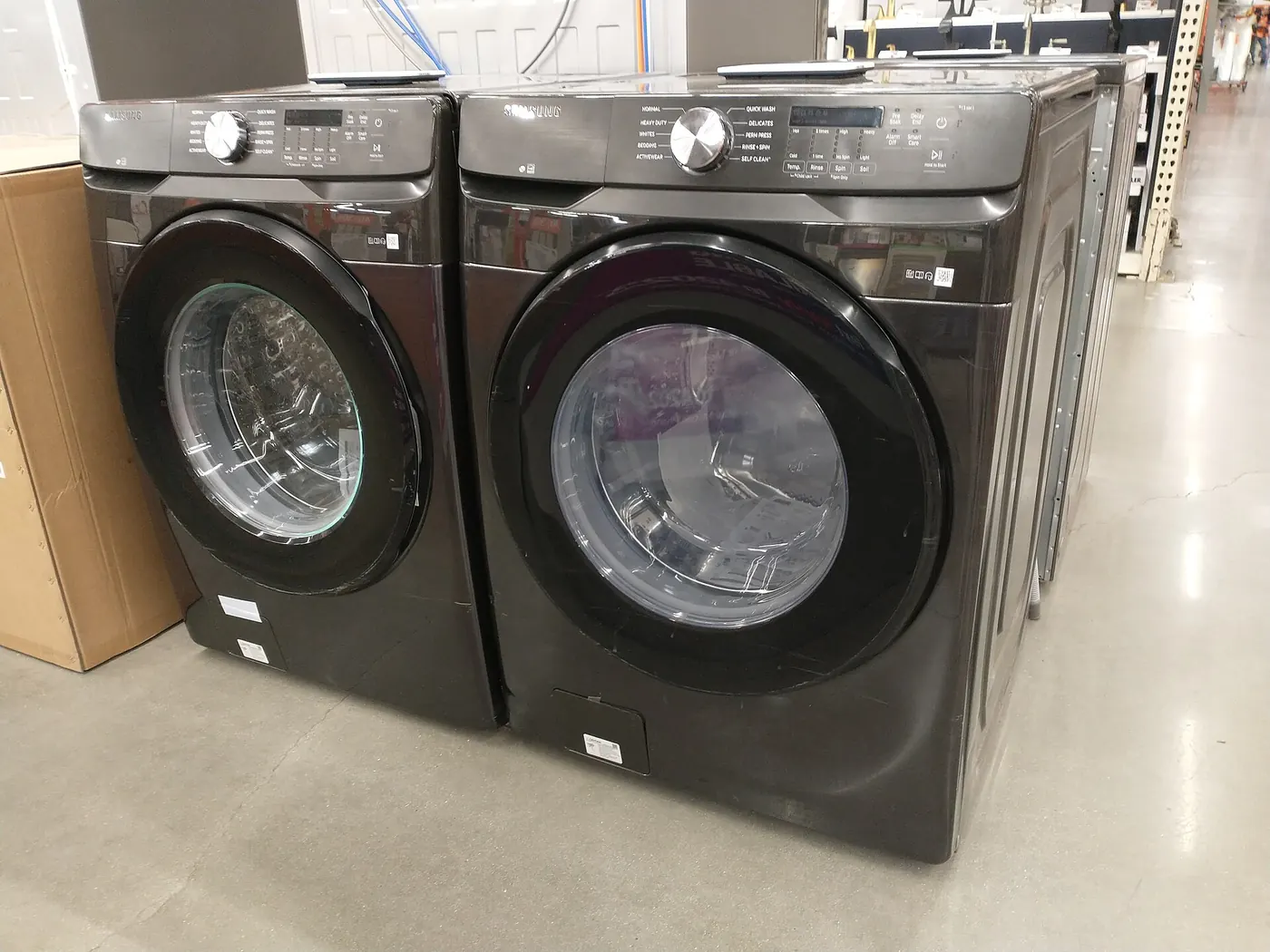
1. Insist on machine-specific information
Generic model specifications tell you nothing about the unit on offer. Before committing, ask for:
- Make, model, year of manufacture and serial number
- Photographs of the actual machine, including the drum interior, control panel and any corrosion or damage
- Original application and approximate running hours where available
- Service history or the reason the machine was retired
- A written condition report naming what was tested and what was replaced
If a seller cannot or will not provide these, the price is irrelevant — you are buying an unknown quantity.
2. Inspect the parts that fail first
| Component | What to look for |
|---|---|
| Drum and bearings | Play in the drum by hand, rumbling or grinding when rotated, rust staining below the bearing housing, water marks suggesting seal failure. |
| Suspension and mountings | Damaged springs or shock absorbers, cracked mounting plates, evidence of the machine moving during extraction. |
| Door and interlock | Gasket condition, hinge play, whether the interlock engages positively and cannot be bypassed. |
| Heating elements | Scale build-up, element resistance, insulation condition, signs of overheating. |
| Control board and sensors | Error codes stored, display condition, water level and temperature sensor readings. |
| Frame and panels | Deep corrosion at the base, previous welding repairs, missing covers. |
3. Watch the machine run, under load
A dry spin proves almost nothing. Ask for the machine to run a full cycle with a representative load: wash, drain, extract and, for dryers, a heated cycle. Listen at extraction speed and watch for vibration, and check the floor around the machine for fresh water marks.
If a remote inspection is the only option, ask for a timestamped video of a complete cycle, not a clip of the machine starting.
4. Check parts availability before you buy
Spare-part support is what separates a bargain from a liability. Before purchase, confirm that common consumables and wear parts are available for the model: door gaskets, drum seals, belts, filters, heating elements, valves and control boards. For older machines, ask specifically whether the control board is still obtainable or repairable — a failed obsolete controller can end a machine's life instantly.
5. Agree the warranty position in writing
Second-hand doesn't have to mean no warranty. Expect a functional warranty on mechanical and electrical components for a defined period, commonly three to twelve months, with the exclusions stated. Trade units sold “as seen” can still be a sound purchase, but only if the condition report is detailed and the price reflects the risk. Our own positions are set out in the returns and warranty policy.
6. Plan installation as part of the purchase
A second-hand machine has to be transported, unloaded, positioned, connected and commissioned — usually for a significant share of the purchase price. Get connection data (electrical load, water supply, drainage and ventilation) before the machine is shipped, confirm the access route with real measurements, and check floor loading for hard-mounted machines.
7. Red flags worth walking away from
- No serial number, or a serial number that does not match the documentation
- Photographs that could come from any unit of that model and no willingness to provide more
- Refusal to run a loaded cycle or to allow an inspection
- Recent, unexplained repairs on load-bearing components
- A price that is only marginally below market for a machine described as fully refurbished